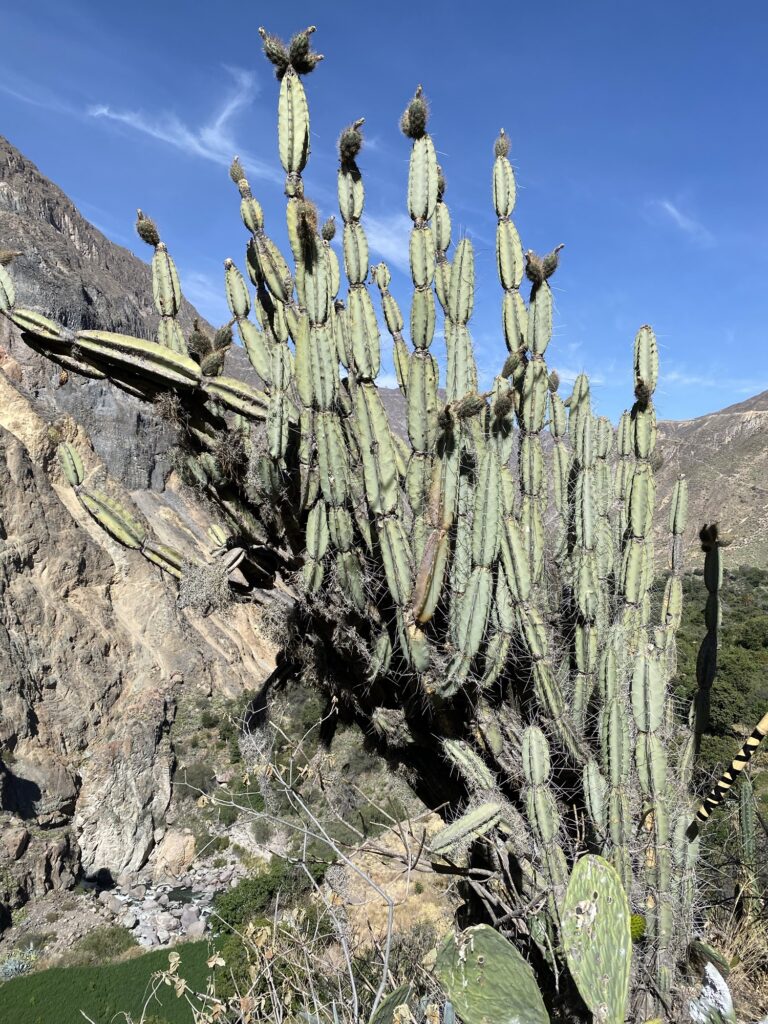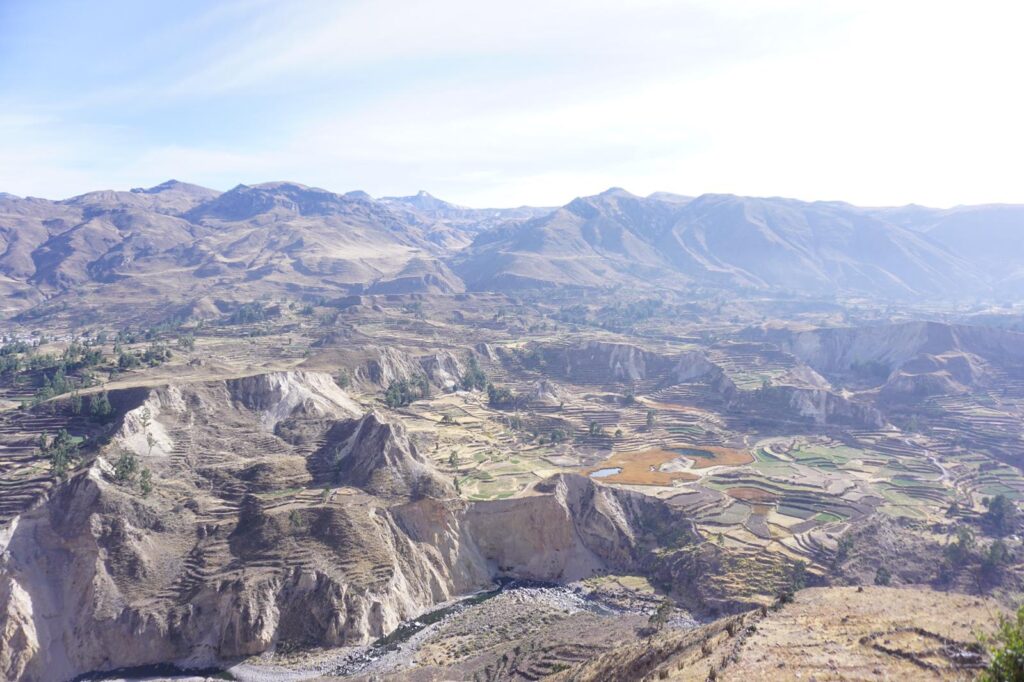
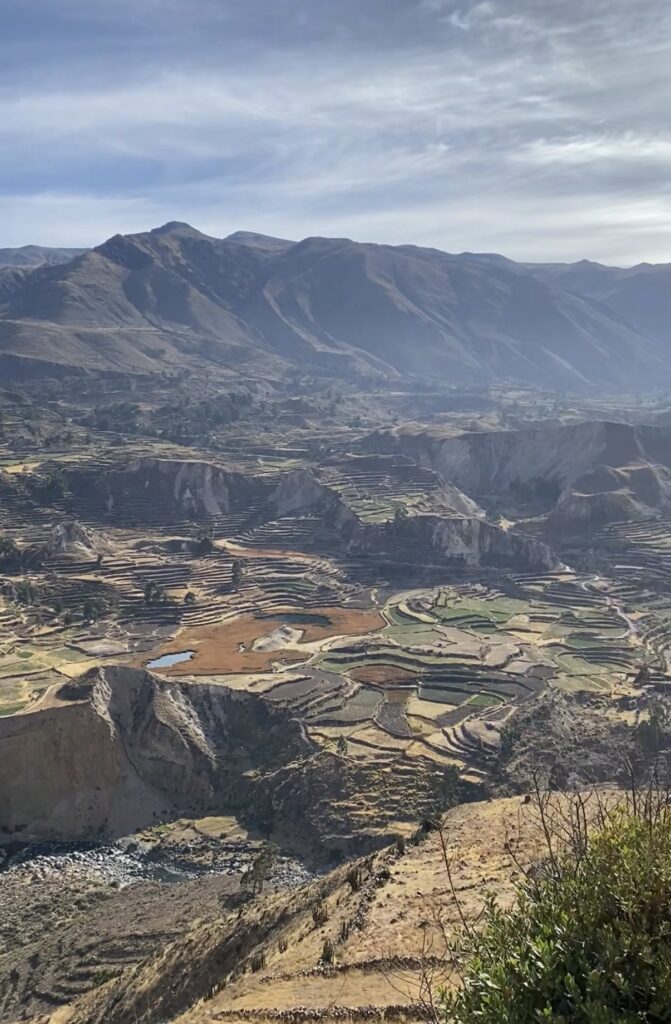
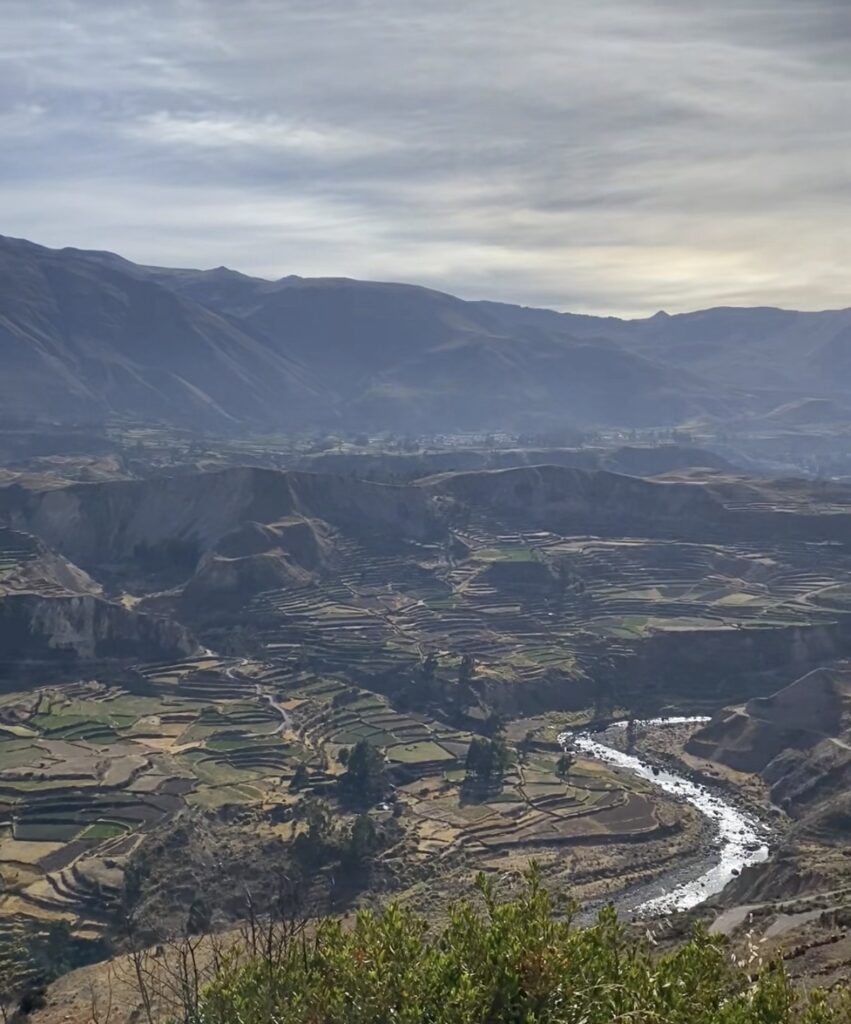
Colca Canyon is a river canyon in southern Peru, located about 160 KM northwest of Arequipa. It is the second deepest canyon in the world at 3270 metres deep, and is a prime habitat for the giant Andean condor. This trek doesn’t just have incredible landscape and wildlife, but it also provides a glimpse into the culture of the community of those who live in the canyon.
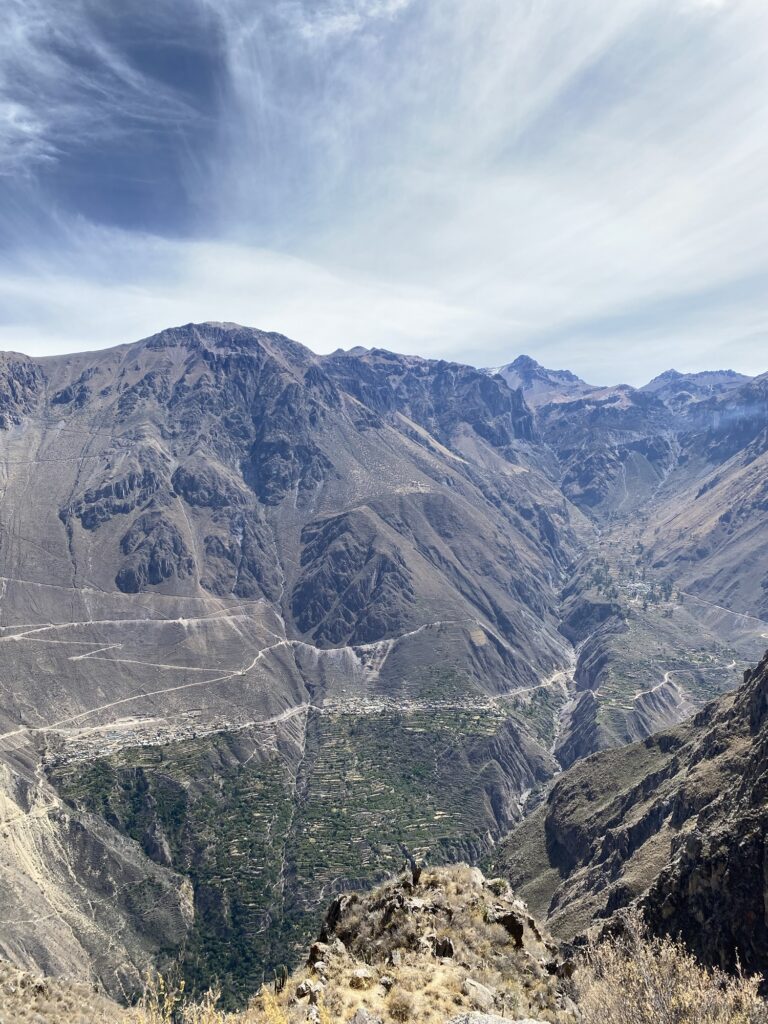
You could just do a day trip to the area from Arequipa, but I highly recommend tackling the canyon trek which you can do over 2 or 3 days. We took the 3 day option and I am glad we did, because the accommodation we stayed in on the first night was beautiful, and we had more time to relax on the second day.
There are lots of companies who offer different tours, but they all largely follow the same outline. We booked our tour through Peru Hop – a tour bus company that makes travelling around Peru as easy as possible. As this was our first backpacking trip, we really had no idea what we were doing, so finding Peru Hop made our first couple weeks a lot easier! Below is all the information you need to plan your trip, along with an insight into my unforgettable experience.
Tours do NOT include the cost of entry to Colca Canyon which is 70 Soles (approx $29 CAD / €18). I can’t remember how much we paid back in 2022, but current rates for this trek are approx $160 CAD / €110 for 2 days and $240 CAD / €160 for 3 days.
For both the 2-day and 3-day option, you will be picked up around 3:00 AM from your hostel in Arequipa and the 4-hour bus journey begins. Breakfast, lunch and dinner are provided each day, but you should definitely bring your own snacks. There were some locals selling cold drinks in the canyon, so also be sure to carry some change.
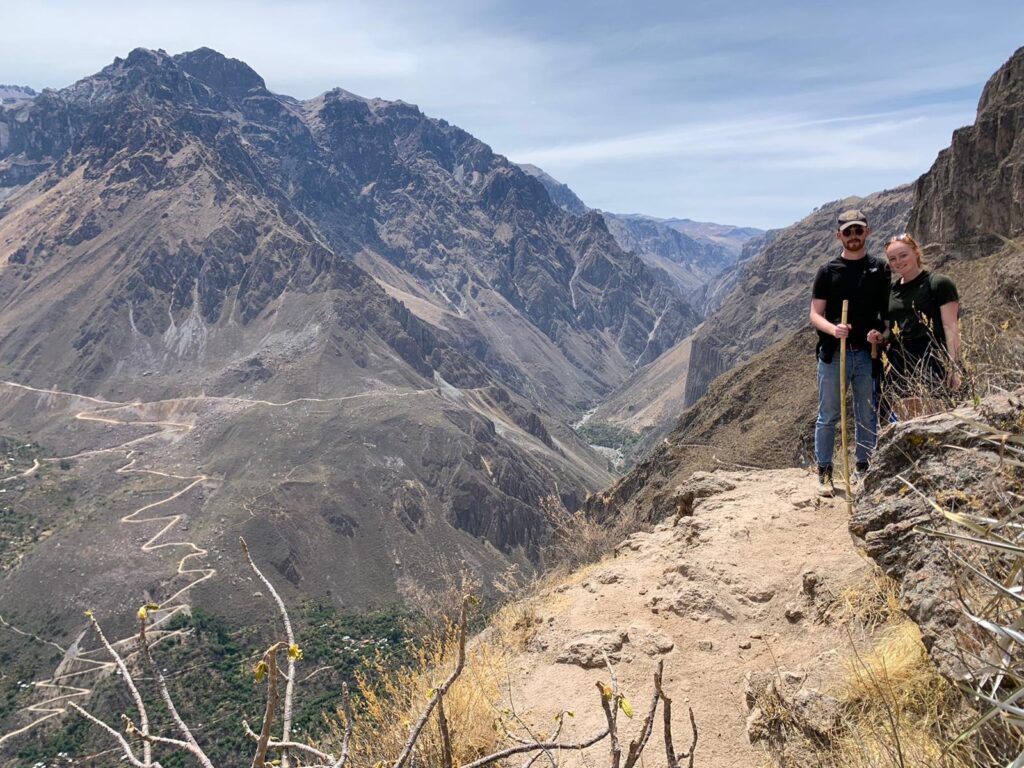
Altitude ranges from 1900 m – 3300 m and you hike downhill on the first day, relatively flat the second day (or after lunch if you’re just doing 2 days), and then the final day is all uphill.
Day 1:
After being picked up, you are taken to Chivay for breakfast. We were given Quinoa con Manzana, among other things, which is a delicious warm, sweet drink
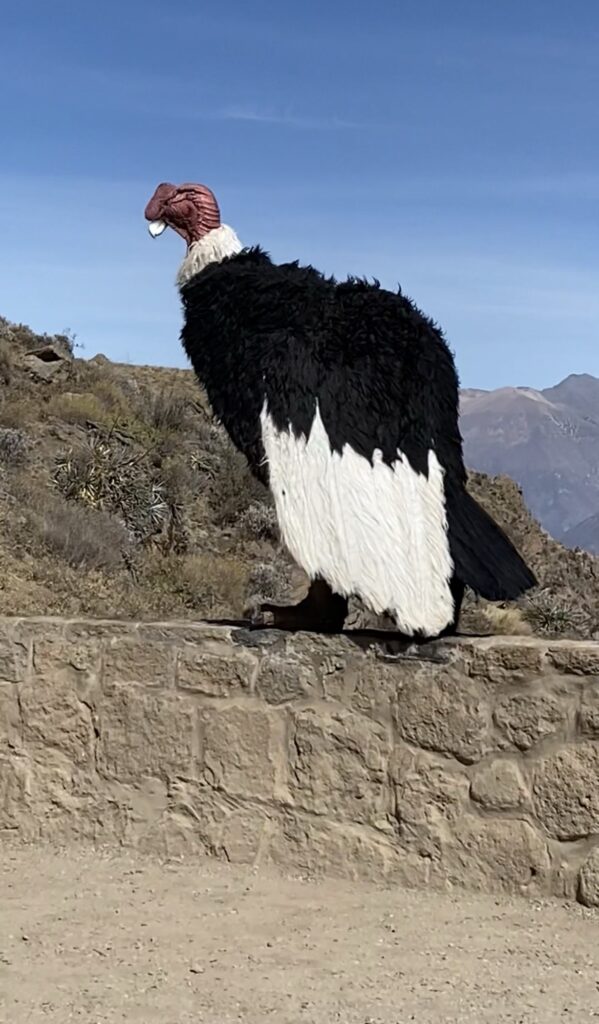
After breakfast, you’re back on the bus and will make a stop at Condor’s Cross to spot some condors. After this, you will travel a further 20 minutes or so to the beginning of the trek.
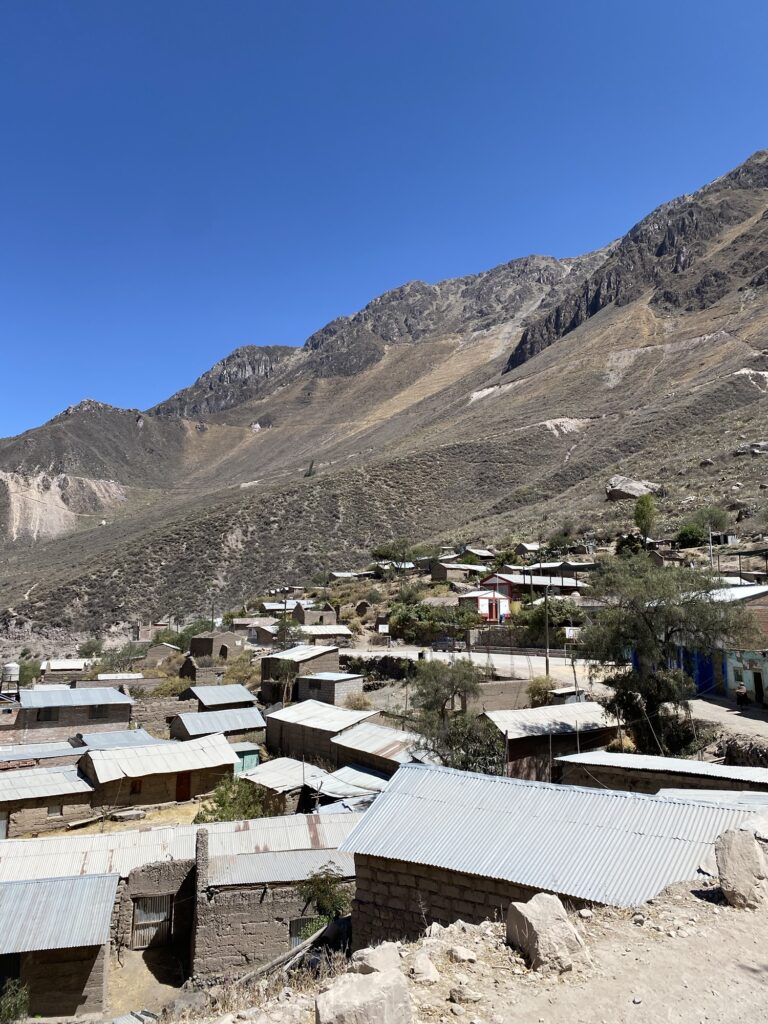
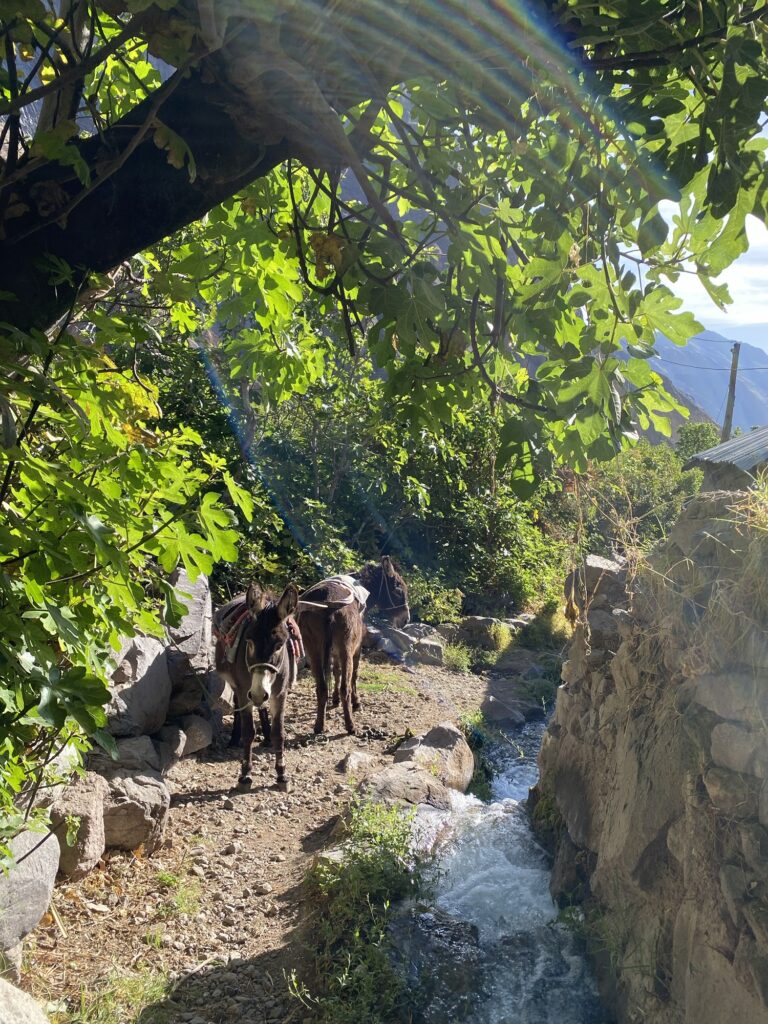
After paying your 70 soles, you will trek downhill from 3300 m to 2100 m which takes on average 3 hours. Lunch is served in the San Juan de Chuccho village, a beautiful little village full of lush plants, farm animals such as donkeys and chickens, and if you do the 3-day option, you get to stay in a cute little stone cottage. Dinner is served here later in the evening, but if you are only here for 2-days, you continue hiking after lunch to the next destination.
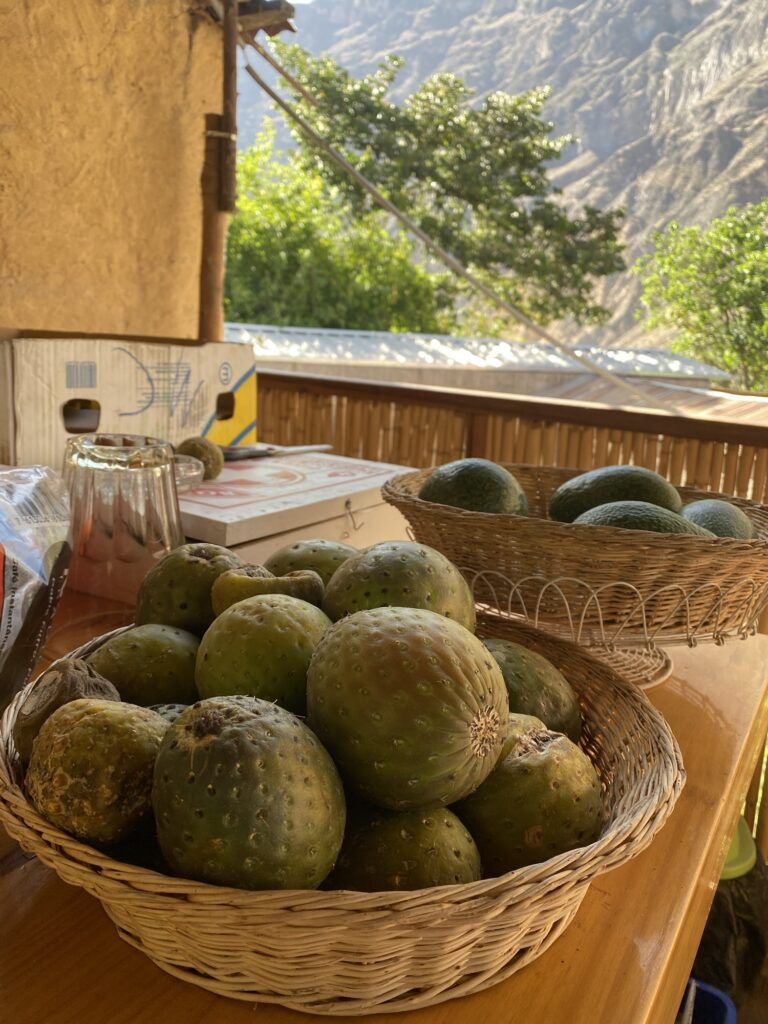
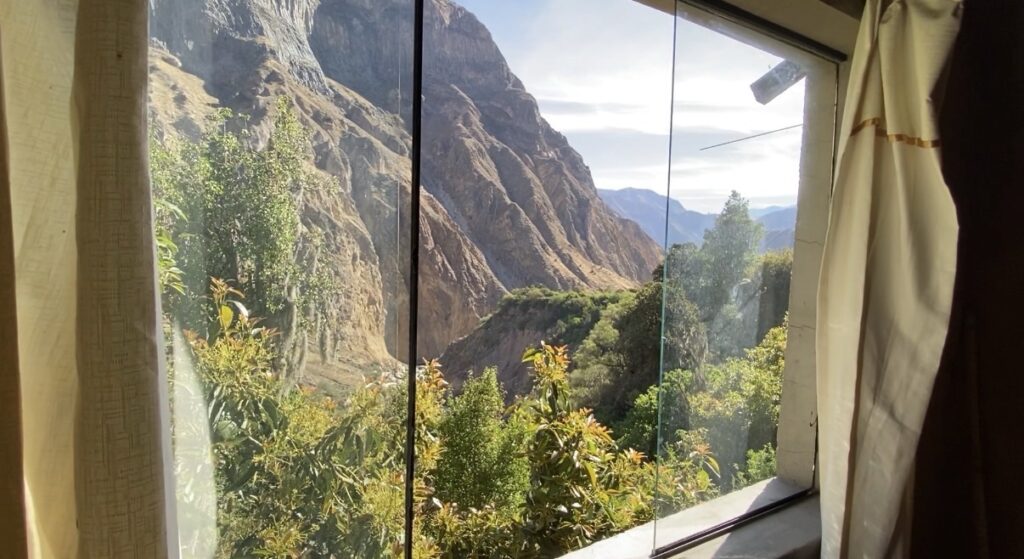
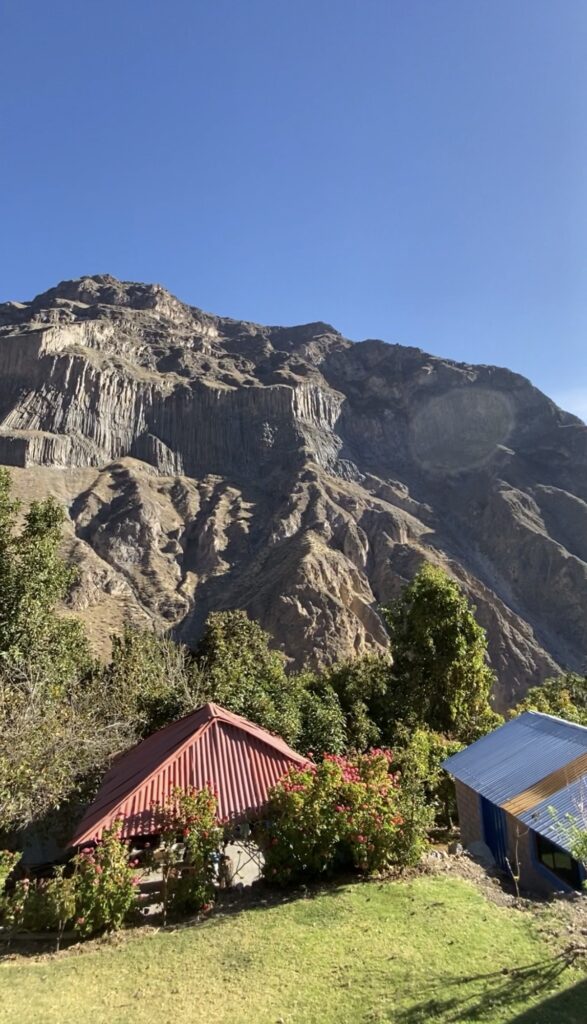
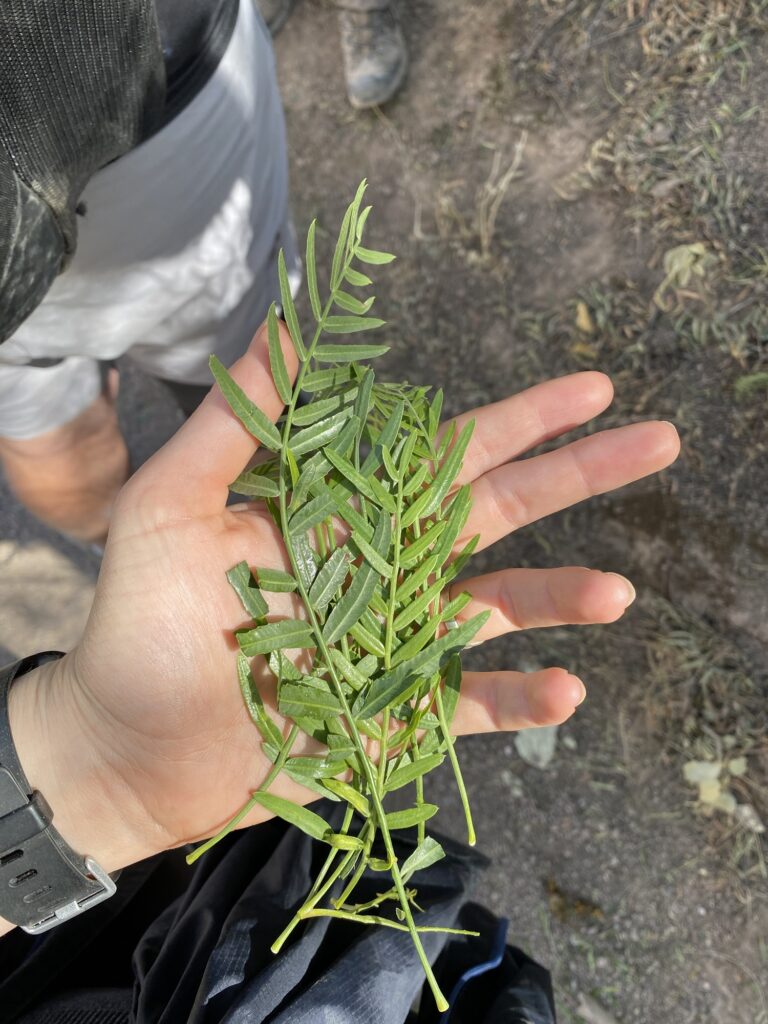
Honestly, I struggled a lot the first day which really surprised me since we were walking downhill!! I felt really light-headed and thought I was going to faint when we got to the bottom of the canyon where the trail evened out. Thankfully, there was a local woman selling cold drinks and our guide had his own little concoction of cocoa leaves, muña (Andean mint), and some other herbs that he put in my hands for me to inhale. I didn’t know what I was breathing in, but it got me back on my feet to make it to lunch where I couldn’t stomach anything. This is why I’m so grateful we opted for 3 days, because after lunch I was able to have a nap and I felt a lot better and was able to join everyone for dinner.
Day 2:
Breakfast is served at 8:00 AM and afterwards, you walk to the town of Cosñirhua to see the production of honey made by the local people where you can have a taste. You will pass some archaeological ruins left by pre-Inca cultures around the area and will most definitely be greeted by locals riding their mules or doing work by their homes. Our guide told us that a lot of young people leave to go to college and don’t end up coming back, so the community is shrinking. It was truly incredible to witness how these families lived and be so warmly greeted by those we encountered on our way.
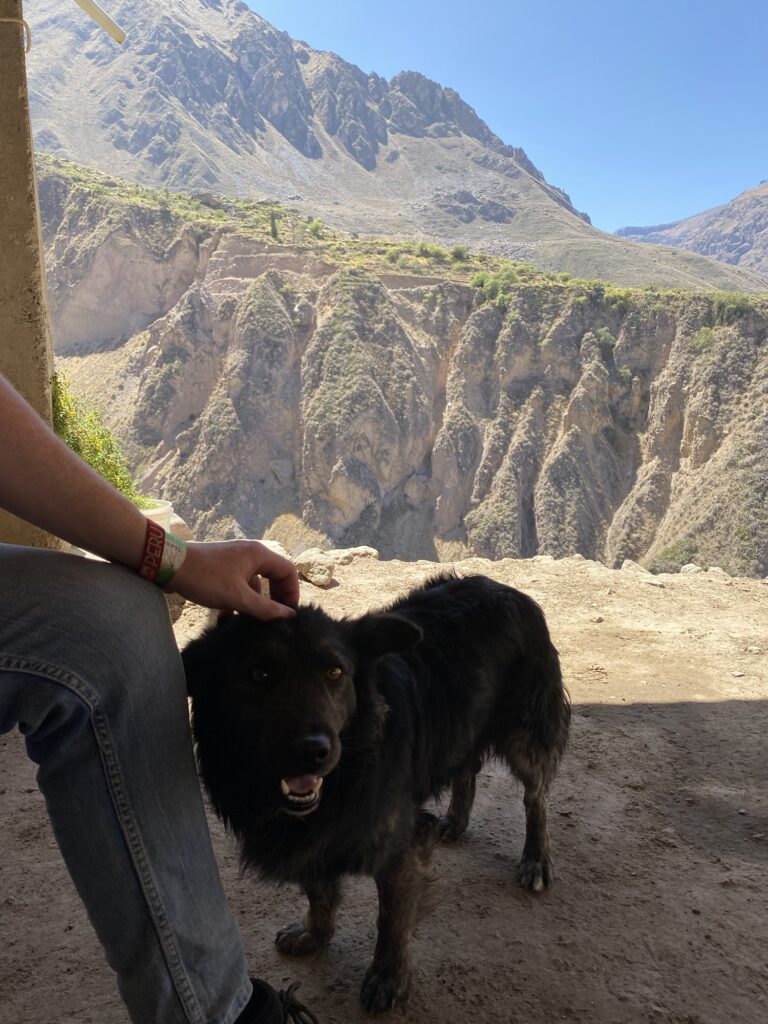
You continue to the town of Malata where there is an old Spanish-designed church. Finally, you descend to the deepest part of the trek to Sangalle village at 1900 m above sea level. The accommodation here isn’t as nice as the first night, it is simple wooden lodges and the doors had gaps at the top so prepare for lots of insects flying about and although there were big windows, there were no curtains so not much privacy. There was also no electricity, so once it gets dark, it’s time for bed which is fair enough because there is a long uphill climb waiting for you the next morning!
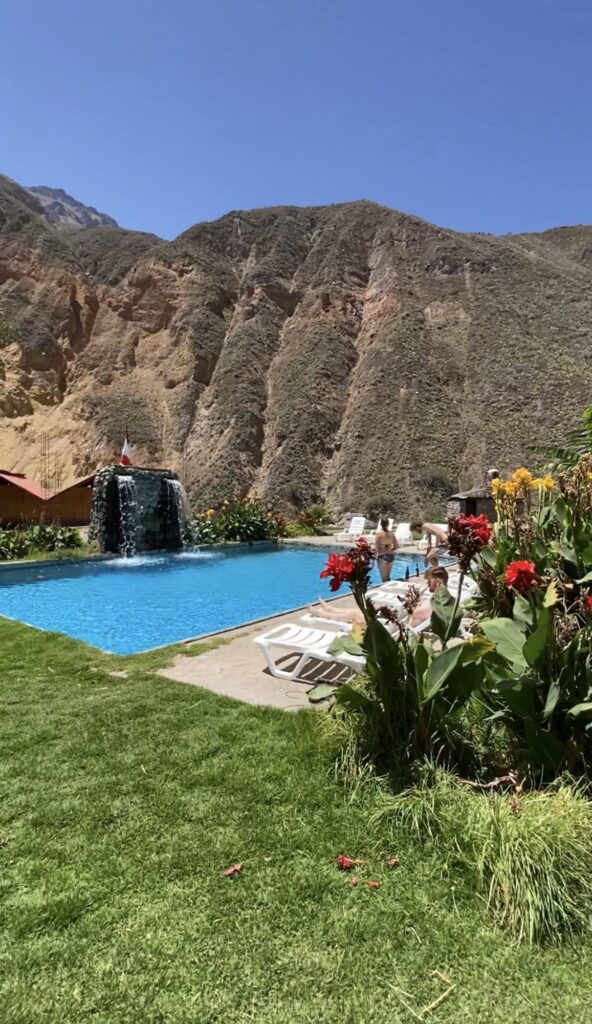
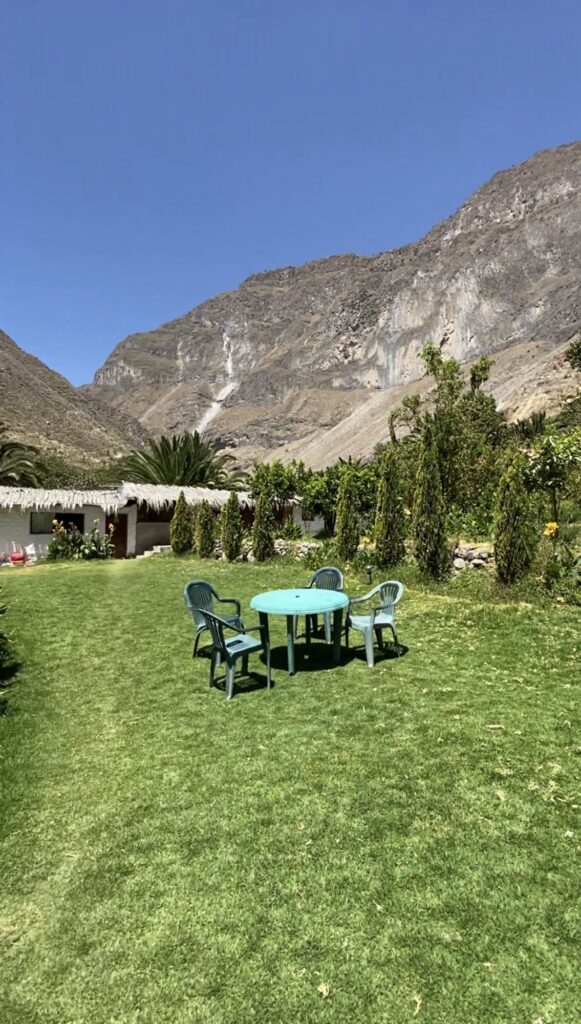
Again, I was so happy we chose the 3-day option because we arrived before the 2-day trekkers so we had the whole place to ourselves for most of the day. (Our group was just us and one other couple). There was a pool to cool off in, and you could also buy beer. We also saw the locals preparing our dinner (a huge spit-roasted pig).
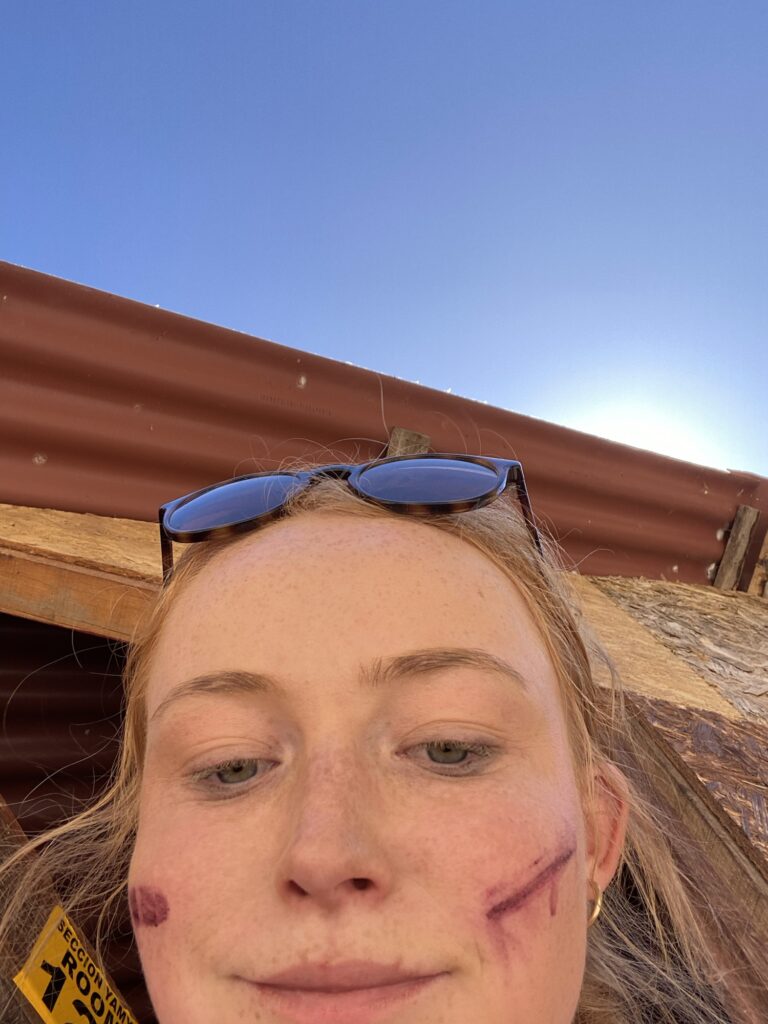
One of my favourite memories from this day was when our guide crushed some bugs and made us put their blood on our faces as war paint.
Day 3:
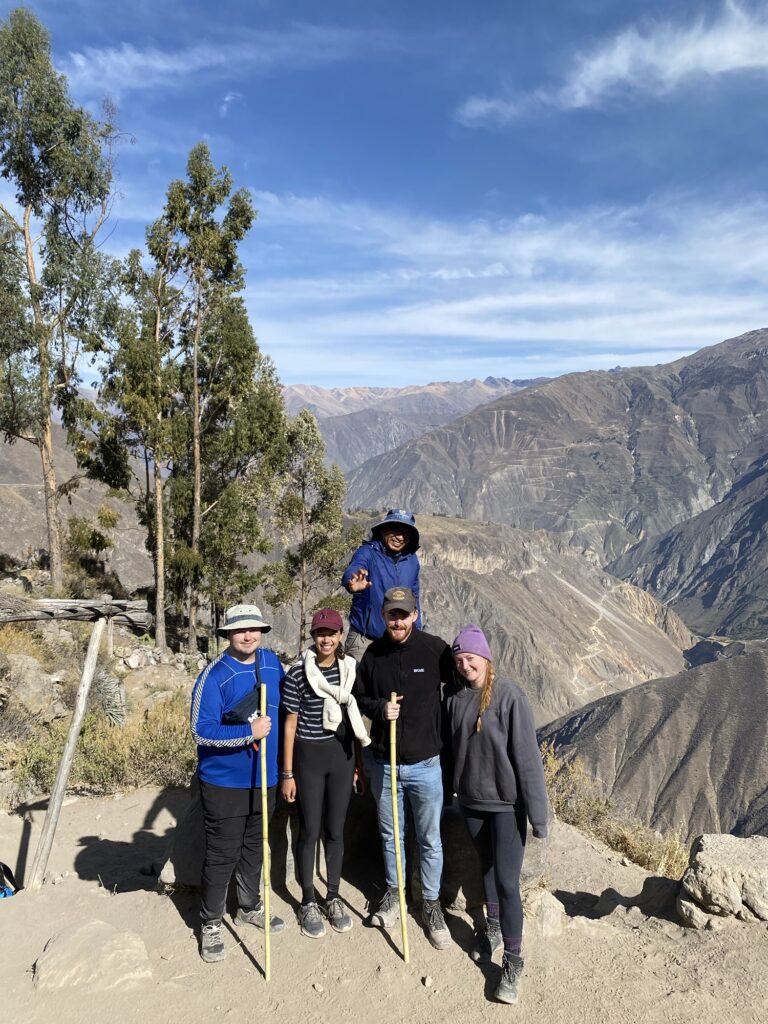
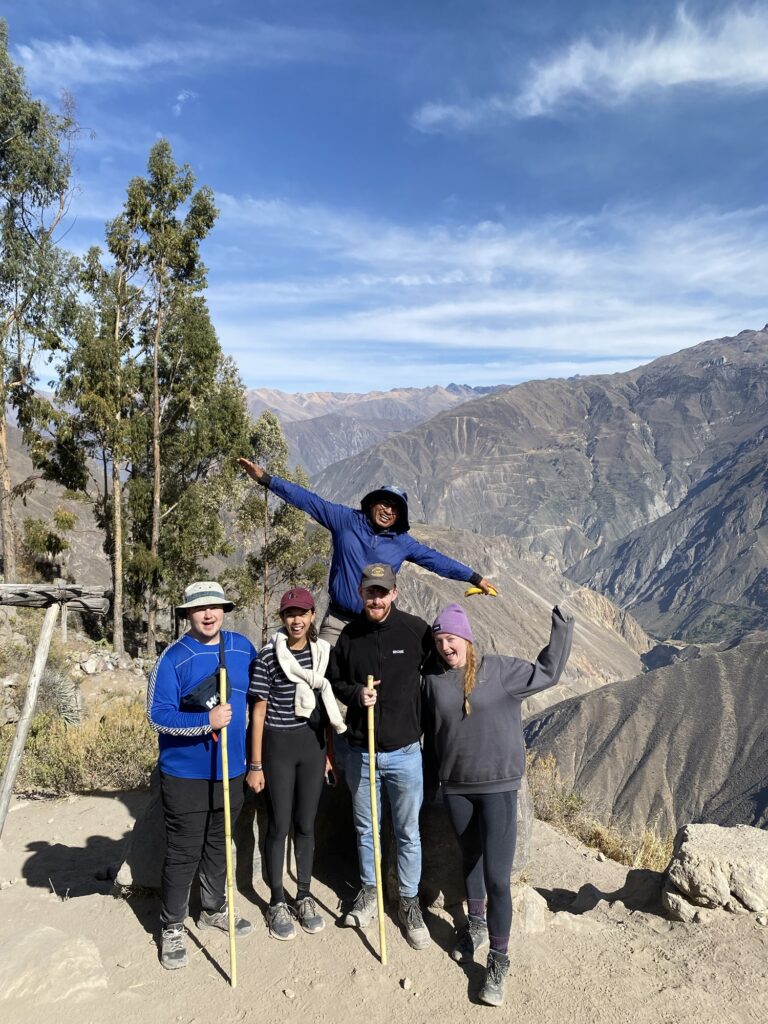
Your day begins at 5:00 AM to climb all the way back up the canyon. It was obviously difficult but manageable, and thankfully not as hot as the first day since we started hiking earlier. It is possible to rent mules if you are struggling, several trotted past me on the climb but I felt good with my wooden stick that my guide gave me along with his magical altitude potion.
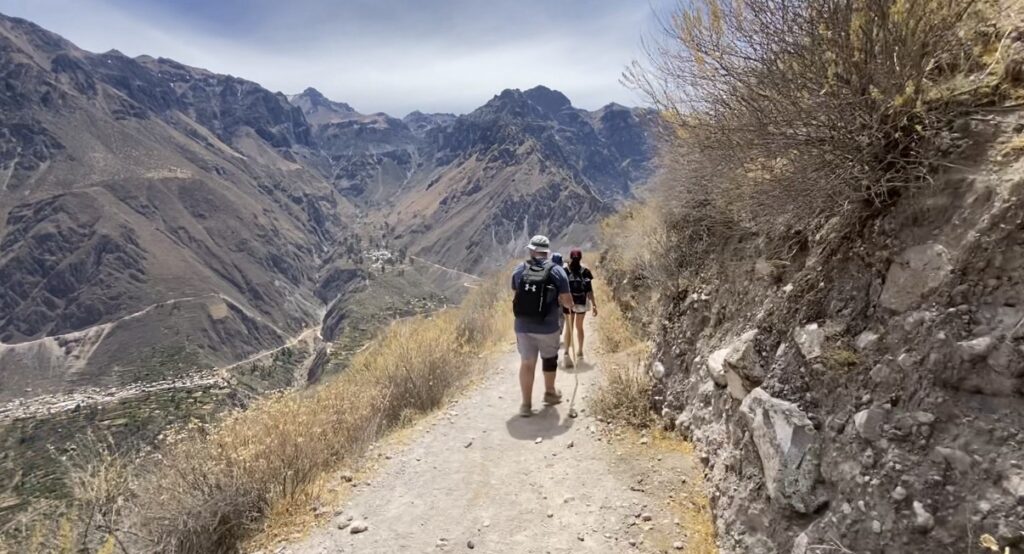
Once you make it to the top, you find yourself in a place called Cabanaconde where you will have breakfast after everyone has completed the trek. Again, it takes approximately 3 hours.
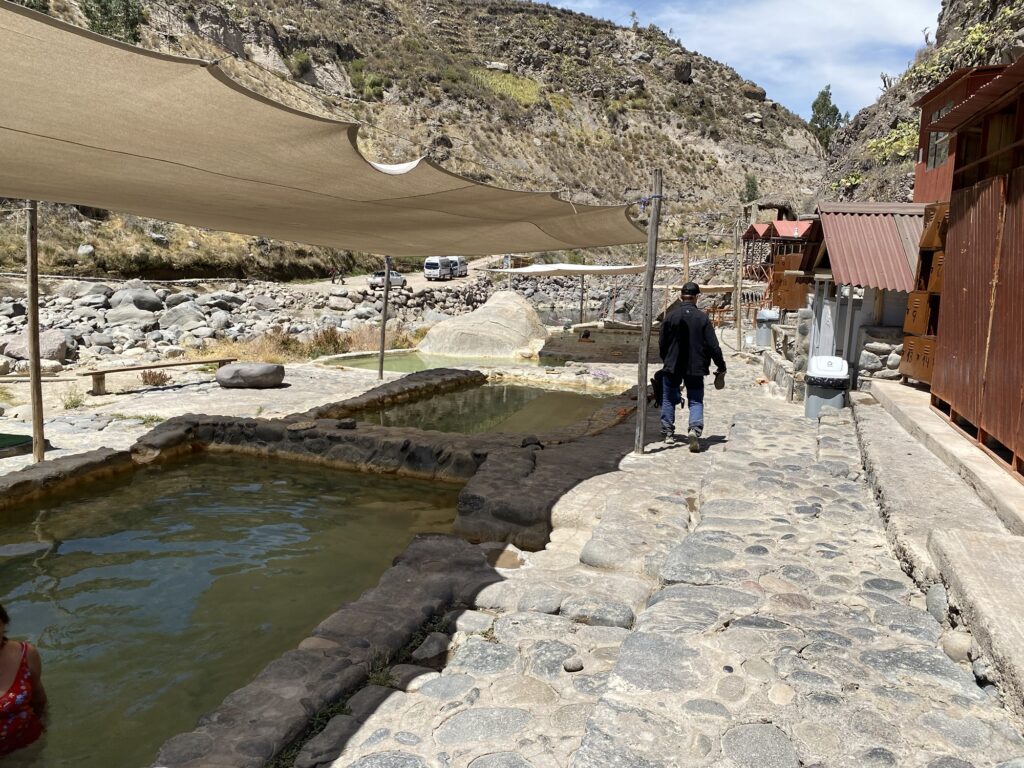
You are taken back to Chivay where you have the option (at an additional cost of 15 soles) to use the hot springs. The hot springs were nice and you’re better off doing it since it’s so cheap and more than likely, most of your group will be spending time here.
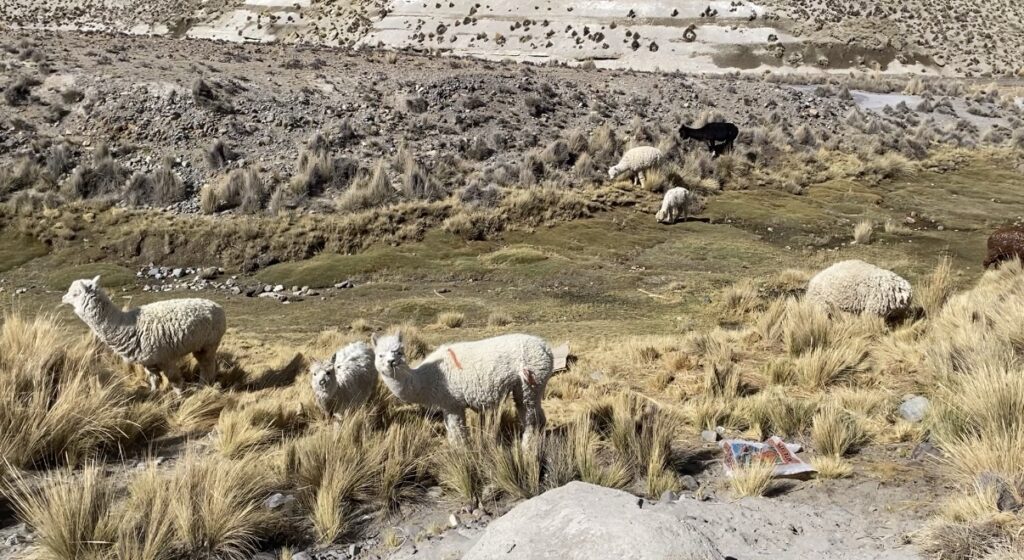
The lunch on the last day is not included in your tour price, but the guides take you to a buffet that costs 30 soles. After lunch, you’re back on the bus descending from 4830 m to 2325 m through a National Reserve and Pampa Cañahuas, where you will see llama, alpaca, vicuña and guanaco. You are dropped back in Arequipa in the late evening.
Tips / Advice
Always carry extra cash on these tours – you never know when you may need a refreshing beverage, or perhaps you may need to rent a mule if something goes wrong, and there are always optional costs such as the final lunch and the hot springs.
Tips are not included for your guide
You need to pay the 70 soles to enter the canyon
We went in September and it was really hot, but at night it gets really cold so make sure you bring some layers
Bring lots of water, sun cream, swimming stuff for the pool/hot springs, snacks, insect repellent, and your passport (they check your passport at the beginning when you’re paying your entrance fee)